
Trinity County: Mountain Roads, Harvest Days, and the People Behind the Plant

There are moments on these drives when I have to remind myself that this is still California.
Mountains, forest, winding roads—and then suddenly a valley opens up, with farms, families, and a little town tucked into the landscape. Getting to Hayfork took time. Watching the scenery change along the way was part of what made it so beautiful.
After my first days in Humboldt and Mendocino, this part of the trip brought me farther into the Emerald Triangle. More conversations, more small businesses, and a chance to see a family farm on its final day of harvest.
A Stop at Area 101
Before heading to Trinity, we stopped at Area 101 near Laytonville, where John, Area 101’s caretaker, kindly gave us a quick tour. I wish I’d had more time.
There were old posters, photographs of legacy leaders, awards from years past, and a spaceship made of roaches. Everywhere I looked, there was something I wanted to ask about.
Area 101 is a Cannabis Trail cultural landmark and the original home of the Emerald Cup. The landmark honors Tim Blake and a gathering place where legacy families came together, celebrated their work, and participated in conversations that helped advance legalization.
Looking at those photographs and posters, I kept thinking about how much history lives in places like this—and how easily we can drive past without knowing it’s there.
Thank you, John, for welcoming us and taking the time to show me around. I’d love to come back for a longer visit—and see those rooms filled again with people gathering, sharing stories, and making new memories.

Trinity County: A Welcome in Hayfork
Our first stop in Hayfork was Hayfork Trailhead Apothecary, where we spent time with Dana Hauser, a farmer behind Hayfork Cannabis Co. and a co-founder of the nonprofit Trinity County Agriculture Alliance. Dana began growing in 2004. Her work now reaches from cultivation to retail and tourism, with a focus on creating lasting economic opportunities in Hayfork. You can read more in her farmer introduction and the Hayfork Cannabis Co. story.
Her slogan, “Fuck Corporate Weed,” gives you a pretty good introduction to her perspective.
The shop gave us a place to talk about local farms and the people working to keep their flower available. Seeing those connections in person makes the idea of supporting small businesses feel very concrete. There’s a grower behind that jar, a person helping you choose it, and a community around both of them.

Dinner Next Door
We had dinner next door in the beautiful former Lucky Trail Bistro, which Dana also owns. Previously a restaurant, it’s now an event and meeting space available for gatherings. If you’re planning an event in the Hayfork area, get in touch with Dana about using the space.
Dana, Zac Scott, Adrien Keys of NorthCountry Farms, and Catherine Sidman were part of the evening. Adrien prepared a delicious meal, and Zac made the amazing elk tartare. I learned something new about myself: I love elk tartare.
Adrien Keys brings decades of experience to NorthCountry Farms. In his farmer introduction, he traces his growing journey back to 1982 and describes his farm as Sun+Earth certified. His work connects that long cultivation history with growing in Trinity County’s sun and soil.
Catherine Sidman, also known as Sidco Cat, is a highly regarded extractor and extraction educator whose work spans the technical side of the industry and advocacy for the people behind it. Industry education events have introduced her as the “Godmother of Extraction,” including a Solvent Direct symposium focused on extraction education. Her connection to the Trinity County Agriculture Alliance also brings her work into the conversation about the future of this region’s farmers. In her own writing about local flower, she draws a connection between natural farming practices, healthy land, and a thriving local economy. When farms succeed, the benefits reach their employees, neighboring businesses, and families. That’s an important part of what I’m seeing on this trip.
There were also beautiful chocolates by I-Li Chang Buell of Vice Chocolates, a local chocolatier whose creations were such a lovely part of the evening. You can find her on Instagram at @vicechocolates.
It was such a lovely way to spend the evening—sitting down together, eating well, and having time to hear more about the lives and businesses behind the places I’m visiting.

A Comfortable Night in Weaverville
From Hayfork, we drove to Weaverville and stayed at the 49er Gold Country Inn.
It was a lovely little spot: clean, comfortable beds, plenty of blankets, and gorgeous views. And something I very much appreciated while traveling—good lighting for doing my makeup and getting ready.
After a day on the road, those details matter. I could imagine coming back in the summer and spending more time exploring. I’m looking forward to returning next year when we’re on tour.

Harvest Day at Canyon Creek Family Farms
Day two brought us to Canyon Creek Family Farms, home of POET, with Michael and Lorien Curran, the farm’s owner-operators. We arrived on their final day of harvest.
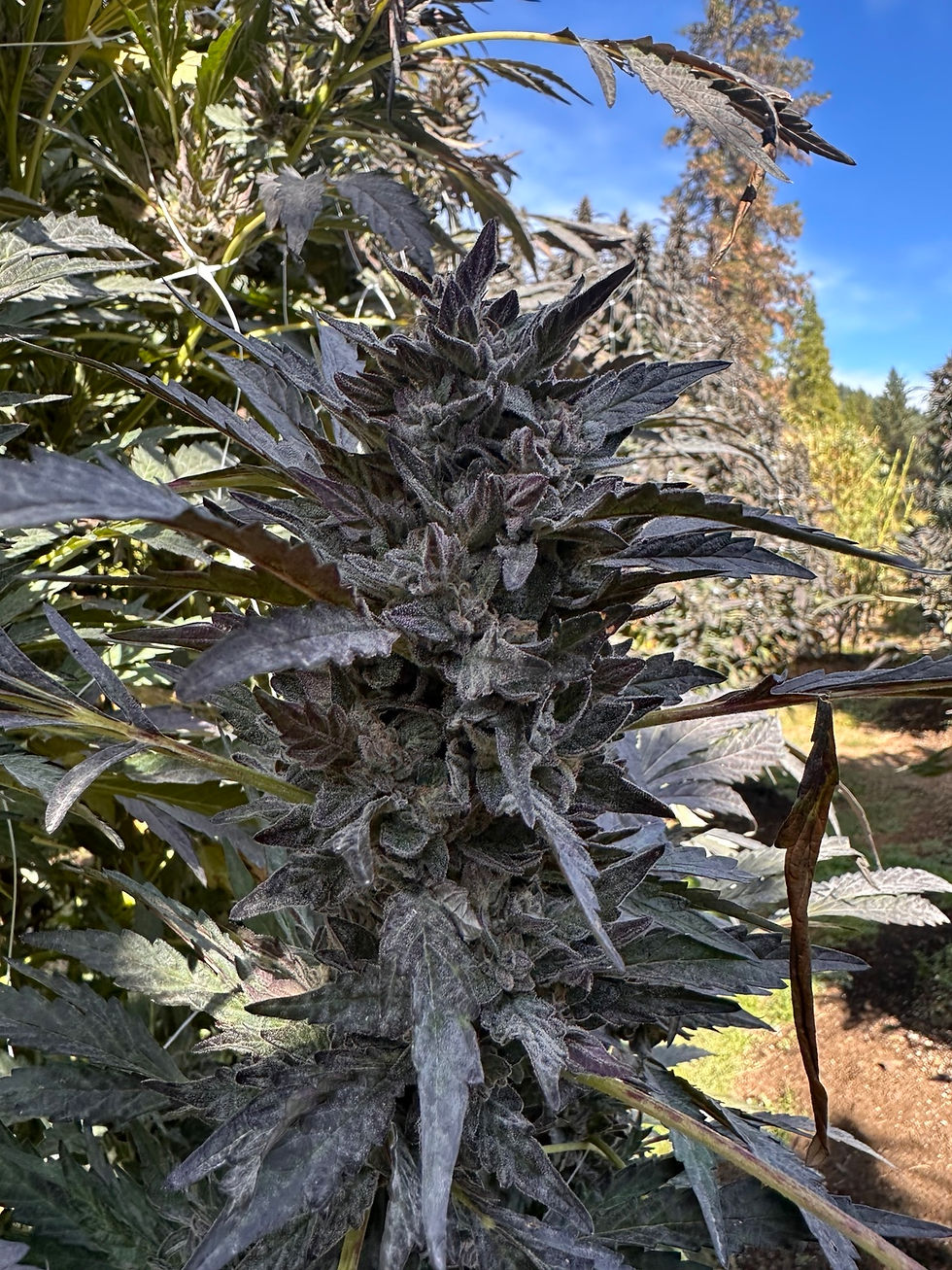
The plants were beautiful. Deep purple leaves, flower catching the sunlight, and mountains around us. My photos also include the vegetable garden, tomatoes still on the vine, and a very friendly dog. There’s a whole life happening around the flower.
In their farm profile, they describe growing in the foothills of the Trinity Alps, where the soil, snow-fed water, and cool evening breezes shape their work. Michael was born and raised in Canyon Creek and has spent decades cultivating there.
POET brings flower from small family farms to market through a collective sourcing model, with a mission that connects regenerative agriculture to helping those farms earn a sustainable price.
Michael and Lorien describe using organic and regenerative techniques, native soil, and alpine snowmelt to grow flower for POET—Producer Owners of the Emerald Triangle—and for solventless extraction. Their 2026 interview introduction identifies more than 50 years of cultivation experience between them. That’s knowledge built through seasons of paying attention to this particular place.
Why Regenerative Farming Belongs in This Story
The farmers I’ve been spending time with describe regenerative farming as central to their work. That deserves more explanation than simply calling their flower outdoor.
Regenerative farming focuses on caring for and rebuilding the living systems that support a farm: soil, water, plants, and the life around them. Practices can include composting, keeping soil covered, reducing soil disturbance, and growing a diversity of plants. The exact combination varies by farm; growing under the sun alone doesn’t establish that a farm uses regenerative methods.
At Canyon Creek, the vegetable garden alongside the flower gives visitors a glimpse of the diversity of what they grow. Their published mission links regenerative agriculture with a regenerative economy: helping small family farms receive a sustainable price for their work.
That relationship matters. A farmer needs the resources to care for the land, keep workers employed, and return for another season. Getting this flower onto shelves—and helping people understand who grew it and how—is part of keeping that work possible. When you ask a shop for regenerative sungrown flower, ask which farm grew it, too.


The People Working Alongside the Plants
During the visit, I also met members of the Hmong harvest crew and Herlinda Vang, a local Hmong community leader. A 2024 profile in Hmong Daily News describes her social-work background and her role in bringing a monument honoring Hmong and American soldiers to Hayfork Park. That work helps preserve the history of the Secret War in Laos and share it with the wider community.
The Hmong are a distinct ethnic people with ancestral roots in China and longstanding communities across Southeast Asia, including Laos, Vietnam, and Thailand. Their history includes generations of agricultural knowledge, language, textile arts, and cultural traditions.
Their connection to the United States also carries a history many Americans were never taught. During the U.S.-backed Secret War in Laos, alongside the Vietnam War, many Hmong served with forces allied to the United States. After the communist takeover of Laos in 1975, many Hmong families fled persecution, often crossing into Thailand and spending years in refugee camps before resettling in the United States and other countries.
That history offers important context, but it doesn’t tell us any individual person’s story. Meeting Herlinda and the crew made me want to learn more about their own experiences and the Hmong community’s place in Trinity County. I’m grateful we connected.
When we talk about the people behind the plant, the workers and neighbors belong in that story alongside the farm owners. Harvest takes people, skill, and many hands. Those contributions deserve recognition, too.

Come for the Views. Take Time for the People.
This trip gave me so many beautiful things to photograph. It also gave me more reasons to keep listening.
A historic gathering place. A shop supporting local flower. A meal shared next door. A comfortable inn after a long drive. A family farm bringing in its harvest. These are places I want people to know about, visit thoughtfully, and support.
I’ll be sharing more of the farms, local businesses, and people I meet as this trip continues. There’s so much here worth getting to know.
Watch the reels on Instagram @thecannabossbabes, and please comment, like, and share the stories that connect with you. Those interactions help more people discover this work—and the farms, businesses, and people featured in it.
Then come back to the blog for a fuller picture. There’s more to tell than fits into a reel.
Comments